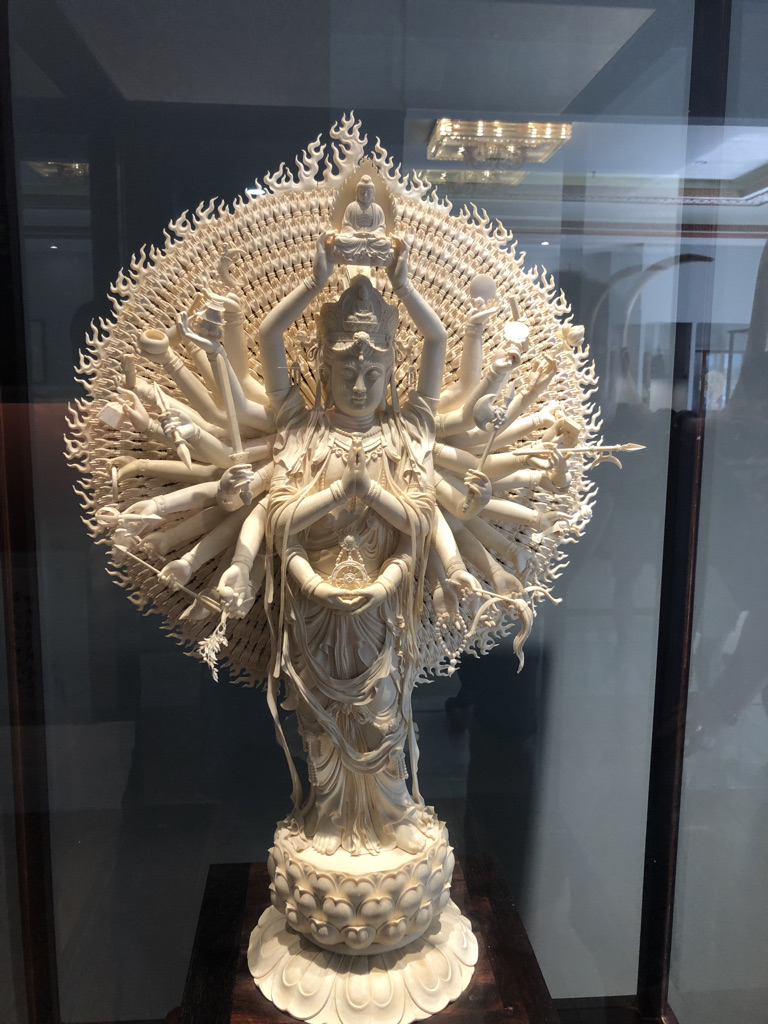
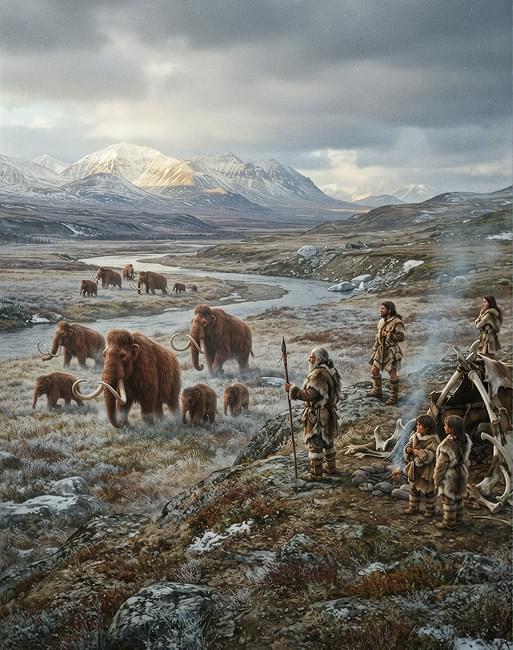
Mammoths
Mammoths first appeared on Earth approximately 5 million years ago during the Pliocene epoch. Their early ancestors inhabited North Africa, and later they spread widely across Europe, Asia, and North America.
The most well-known species is the woolly mammoth (Mammuthus primigenius), which lived during the Pleistocene epoch (from 300,000 to 10,000 years ago). These animals, well-adapted to cold climates, are most commonly found preserved in the permafrost of Yakutia and Siberia.
Tusks
The age of mammoth tusks extracted in Yakutia ranges from 10,000 to 25,000 years.
Mammoth Tusk as an Interior Design Element
A restored mammoth tusk is not merely a decorative item but a unique artifact carrying millennia of history.
 Its value as an interior design solution is multifaceted, comprising aesthetic, historical, investment, and cultural components.
Aesthetic Value: Art and Nature in One Object
The primary value of such a tusk lies in its unparalleled, natural beauty.
-
Uniqueness: each tusk has its own unique curve, size, texture, and color palette—ranging from milky-white to dark brown, black, and even blue. No two specimens in nature are identical.
-
Standalone Sculpture: a professionally restored tusk is a complete sculptural composition. Thanks to its “beautiful contours,” it fits perfectly into any interior. It can be used as an independent art object, not merely as an accessory.
-
Status Element: such pieces are rightfully considered items of luxury and attributes of high-end interiors. A bone composition can “bring the interior to life in its own way, filling it with new meaning.”
Historical and Collectible Value: Touching Eternity
This is not merely decoration, but a tangible witness to the distant past.
-
“Treasure of the Ice Age”: this is an opportunity to literally “touch” an ancient artifact holding thousands of years of history. The age of such tusks exceeds 10,000 years.
-
Collectible Value: whole, undamaged tusks possess collectible value in their own right. Over time, such pieces acquire high antique and collectible worth.
-
“Second Life” for an Artifact: the restoration process returns the tusk to its primordial appearance and “grants it new life after millennia of oblivion.”
Investment Value: Investing in Eternity
A mammoth tusk is a limited, non-renewable resource, making it attractive for investment.
-
Appreciation in Value: due to its rarity, such items only increase in value over time, making them a reliable investment.
Cultural and Emotional Value: Symbolism and Status
-
Exclusivity and Status: owning such a rarity emphasizes refined taste and high social status. It is an ideal gift for someone who is difficult to surprise.
-
Symbolism: in some cultures, the mammoth symbolizes strength, endurance, and the solidity of family values.
-
Emotional Connection: the “mystery of time” preserved in the tusk fascinates and attracts, evoking a deep emotional response.
The Value of Owning Mammoth Tusk Artwork: Artistic and Aesthetic Worth
Mammoth tusk is a unique natural material highly valued by craftsmen for its properties.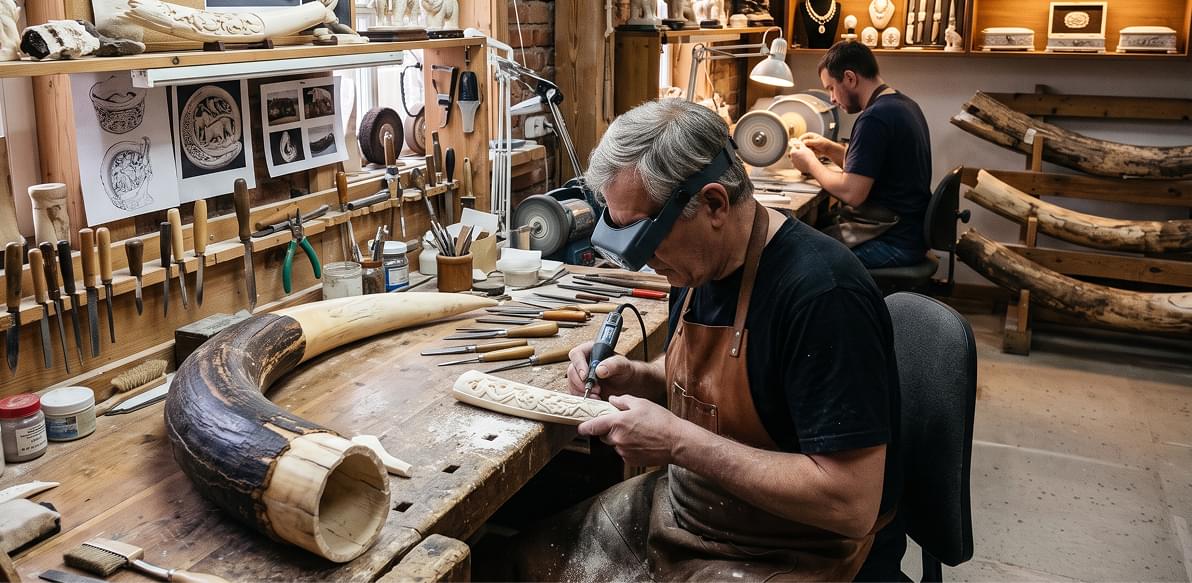 Unique Physical Properties: the material has high density and a homogeneous structure, yet is sufficiently pliable for the finest hand craftsmanship. It does not crumble, holds its shape well, and allows for the creation of complex, detailed works.
-
Unparalleled Aesthetics: the tusk has a natural texture and a wide range of shades—from milky-white to warm cream and honey, with natural veining that cannot be artificially reproduced. This makes each piece absolutely unique.
-
High Level of Craftsmanship: working with mammoth tusk requires the highest level of professionalism. Creating a single piece can take months or even years, and any mistake can ruin the expensive raw material. Therefore, finished works are perceived not as crafts but as full-fledged works of art worthy of museum collections
A wide range of items are created from this material: from jewelry and boxes to sculptures, chess pieces, and even furniture elements.
Investment and Material Value
Mammoth tusk is a valuable resource often considered an investment object.
-
Limited and Non-Renewable: mammoth tusk reserves are limited, as this material is no longer produced by nature. This directly affects its high cost.
-
High Liquidity: items made from this material possess high liquidity and steadily increase in price.
-
Significant Cost: prices for items can range from tens of thousands to astronomical sums. For example:
-
A vintage handcrafted box is valued at 150,000 rubles.
-
A batch of tusks can cost more than 20 million rubles.
-
Unique sculptural compositions can reach prices of 1.5–2 billion rubles.
-
Ban on Elephant Ivory and Legal Alternative
This is perhaps the main economic and legal factor.
-
Elephant Ivory Restrictions: China is a party to the Convention on International Trade in Endangered Species of Wild Fauna and Flora (CITES). In 1990, the country ceased importing African elephant ivory. This led to an acute shortage of raw materials for traditional crafts.
-
Mammoth Tusk as a Legal Solution: unlike elephant ivory, mammoth tusk is a fossil material from long-extinct animals. Therefore, its extraction and trade do not fall under CITES bans. This makes it the only legal and accessible alternative that allows the preservation of carving traditions.